The age of electro mobility is truly upon us, with markets around the world, as well as here in Aotearoa New Zealand, seeing ever increasing numbers of electric scooters, motorbikes, cars and even some heavier vehicles on the roads.
In 2025 no less than a quarter of all new car sales globally were pure electric vehicles (EVs), while hybrids captured well over 30% of sales in key markets like Europe and up to 50% in Asia Pacific. This rise has been driven largely by emerging markets and is a sign of things to come.
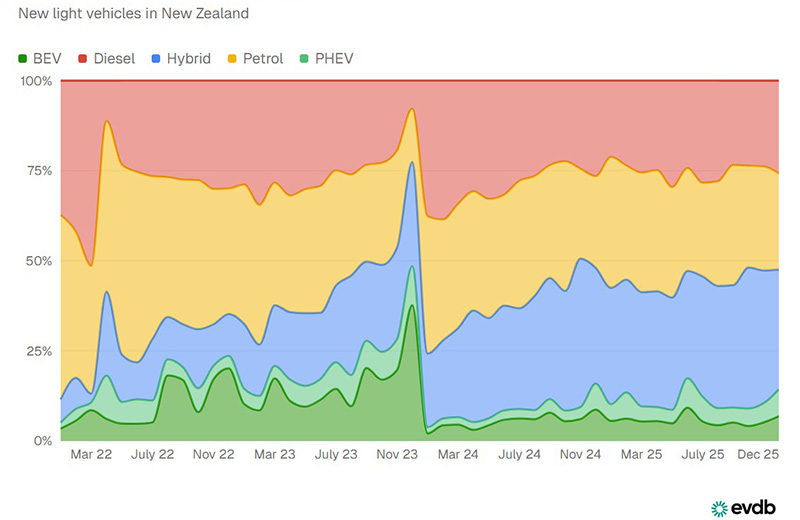
Here in Aotearoa, sales of EVs collapsed following the axing of the clean car discount and the finish of EVs’ exemption from road user charges (RUCs). According to evbd.nz, 2025 saw EVs capture only 5.6% of the New Zealand market – up 0.2% points from 2024. It was hybrids though which made the biggest surge, climbing nearly four percentage points to 33.5% of the market.
Looking to the future, in the short term we are likely to see a surge of interest in EVs, as the current fuel situation reignites the debate on electrification as energy resilience, though whether that translates to sales remains to be seen. As RUCs become the standard on all vehicle types, a more level playing field may emerge. On the other hand, if the government scraps the clean car standard altogether, as they are considering, we may find ourselves a dumping ground for dirtier second-hand petrol and diesel vehicles.
Longer term, where the international market goes, so too will we, as electric vehicles become the standard, and therefore what is available to us to import.
What that means for battery stewardship
The fact remains that batteries in an estimated 124,000 EVs and hybrids currently on the road will eventually need to be dealt with at their end of life, and that number is only growing.
The current unknown is exactly how many and when, given changes in uptake and the unknown life span of many large batteries.
A Stanford report from 2024 found batteries are lasting up to 40% longer than expected – often outliving the vehicle itself. Another report by Recurrent found only a small percentage of EV owners have had to replace the battery.
This makes modelling the future numbers of end-of-life batteries challenging to say the least.
Further uncertainty comes from used vehicle imports where battery health and therefore remaining lifespan may be unknown or highly variable.
Currently we have no onshore capacity for processing large batteries into black mass, and right now the return on the investment required to create it would be incredibly poor due to the capital required and the small numbers becoming end-of-life each year. The costs to export those small numbers however is high, in part due to perceived fire risk and associated insurance risk.
While many producers are keen to have large batteries returned to them so that they can extract and reuse the raw materials, the long time horizons involved make modelling future demand for materials and costs for stewardship challenging.
This calls for a different approach and financial model than for stewardship of products with a shorter lifespan and less technical end of life solutions.
But if there’s one thing the industry is not short on it’s innovation.